
In my work as a refrigeration technician, I’ve noticed several errors that occur with varying frequency. Therefore, I’ve summarized the most common causes here according to their relevance. An analytical approach helps to quickly and successfully troubleshoot problems. Systematic errors, in particular, can be easily identified using appropriate measuring equipment.
Unfortunately, not all faults are easy to fix, so in these cases a professional must handle the repair. Nevertheless, I believe it’s advantageous to know the defect beforehand. This saves time-consuming costs associated with a technician’s troubleshooting. Furthermore, you won’t be pressured into unnecessary repairs if you already know the problem with the cooling system.
Error No. 1: Refrigerant shortage
One of the most common reasons for insufficient cooling performance is a lack of refrigerant. This is usually caused by leaks in the system. The signs are often clear:
The cooling performance noticeably decreases.
The system is running continuously, but is not reaching the desired target temperature.
Ice forms on the pipes or directly on the evaporator.
An unusually low pressure is observed on either the low- or high-pressure side.
There are several ways to check for leaks. A simple visual method is to use soapy water (or special leak detection spray) to spray potential leak points. If the system is still pressurized, soap bubbles will form at the leak – as shown in the picture. In this case, the screw connection was the cause of the leak.

Another option is measurement . Larger systems often have pressure gauges – one on the low-pressure side (suction side) and one on the high-pressure side (pressure side). However, this type of fault diagnosis is difficult for a layperson to assess, but it can potentially be clarified by phone with a specialist.
A leak detector offers an additional option for locating leaks – however, this requires having such a device. With a threaded connection (flared fitting), the union nuts can often simply be tightened. If, on the other hand, there is a hole in the copper pipe (e.g., worn through by vibrations) or a leak at a soldered joint, the pipe must be replaced or the joint professionally resoldered.
In any case, a specialist company must be consulted, as the refrigerant must be professionally extracted and refilled.
Error No. 2: Contaminated capacitors
The condenser (also called the liquefier) is the heat exchanger that releases heat during operation and therefore becomes warm (see image). The gaseous (superheated) refrigerant coming from the compressor flows into the condenser and undergoes three phases there: deheating , condensation , and subcooling .
This process is characteristic of systems operating in the subcritical range. However , there are also refrigerants that operate in the transcritical range and are likely to become increasingly important in the future. A key example is R744 , better known as carbon dioxide ( CO2 ) . This will not be discussed further here.

The condenser is a key component of the system, releasing heat from the refrigerant to the environment. If the condenser fins become clogged with dust, dirt, or leaves, heat can no longer be dissipated efficiently. Furthermore, the delicate fins on air-fed heat exchangers are often bent.
Both of these factors lead to increased pressure in the system and reduced cooling capacity – potentially resulting in complete system failure due to a high-pressure fault. These problems typically occur more frequently in summer due to high ambient temperatures.
What you can do: Clean the condenser fins regularly to ensure optimal performance. Be careful not to bend the fins. If they are already bent, you can carefully straighten them with a special fin comb.
Error No. 3: Icy evaporator
The evaporator is the component of a refrigeration system that absorbs heat from the surroundings. Inside the evaporator, the refrigerant evaporates – changing its state from liquid to vapor. This phase change allows a large amount of heat energy to be absorbed from the environment.

It is perfectly normal for frost to form very quickly on the evaporator surface, especially in the freezer compartment. This frost can rapidly grow into a thick layer of ice, which is why an automatic defrosting process is initiated at regular intervals.
However, if the defrost times are incorrectly set or the freezer is frequently opened (allowing warm, humid air – for example, during cooking – to enter), this significantly accelerates ice formation. In such cases, manual defrosting is often necessary, as the regular defrosting function is no longer sufficient.
Important: Be sure to switch the unit off completely before doing this! Defrosting with hot water works very well and speeds up the process. However, take meticulous care to protect the electronics from moisture and yourself from electric shock.
Error No. 4: Electrical problems
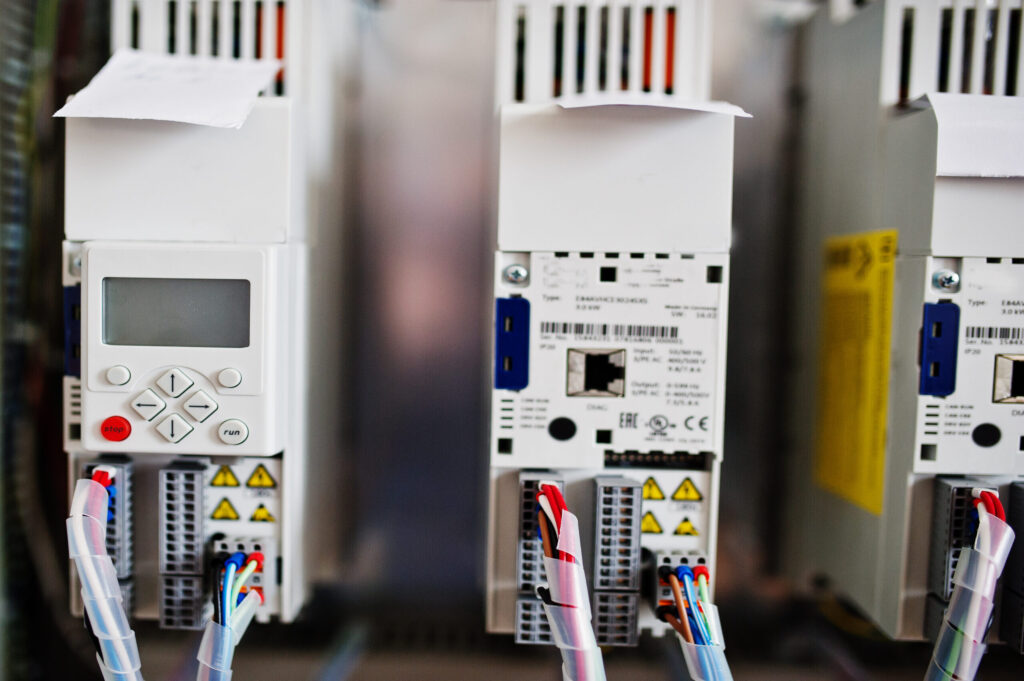
Refrigeration systems are complex and contain many electrical components. Common causes of electrical malfunctions include:
Poor connections or loose cables.
Blown fuses or defective contactors (relays).
Defective sensors (e.g. temperature sensors) and actuators.
As part of proper maintenance, it is standard practice to tighten all electrical terminals to prevent loose connections. If a wiring diagram is available for the cooling system, the current path can be traced using a voltmeter. This usually allows for a very quick localization of where the current flow is interrupted.

Faulty fuses and relays must be replaced with new components. My recommendation here is very clear: Anyone without professional training in electrical work should absolutely leave it alone to protect themselves and others. Electricity is life-threatening!
If sensors are defective, this leads to incorrect control behavior of the system. The actual temperature values can usually be read directly from the controller and should be compared with an external thermometer. Alternatively, sensors can be disconnected, their electrical resistance measured, and this compared with the characteristic curves in the manufacturer’s specifications.
A faulty actuator, such as a solenoid valve, can often be identified by a distinct “click” when the coil is pulled on and off. Caution: If the coil is operated for too long without the metallic core (armature) while switched on, it will quickly overheat and be destroyed (due to the lack of inductive reactance).
The fan motors on the evaporator or condenser also frequently fail and need to be replaced.
Error No. 5: Clogged filter dryers
The filter drier protects the system from contaminants and moisture. If it becomes clogged, the refrigerant flow is blocked, resulting in reduced cooling capacity and significantly higher energy consumption.
A blockage of the filter drier due to contamination is easily recognizable by the formation of frost immediately after the filter drier . A significant temperature difference between the filter inlet and outlet is also a sure sign of a blockage.

What you can do: A clogged filter dryer cannot be cleaned and must be replaced by a refrigeration technician. Ideally, this replacement should be carried out as a preventative measure during regular maintenance to avoid system malfunctions in the first place.
Summary and Conclusion
Many of the most common problems in refrigeration systems can be avoided through regular maintenance and early detection of symptoms . A clean system, free of leaks and dirt, not only operates more efficiently but also has a significantly longer lifespan.
Invest in professional maintenance to ensure the performance of your refrigeration system and avoid unexpected breakdowns.
Have you ever experienced any of these errors? Share your experiences in the comments!