
Selecting the right refrigerant is one of the most important decisions when planning, modernizing, or maintaining refrigeration and air conditioning systems. Besides technical performance, environmental aspects, legal requirements, and long-term cost-effectiveness play a crucial role today.
This article explains which criteria are crucial when selecting a refrigerant and what you should pay attention to in practice.
1. Environmental aspects: Keep GWP and ODP in mind
Modern refrigerants must not only be efficient, but also environmentally friendly.
Key figures:
GWP (Global Warming Potential): Indicates how much a refrigerant contributes to the greenhouse effect.
ODP (Ozone Depletion Potential): Describes the ozone depletion potential – usually 0 for modern refrigerants.
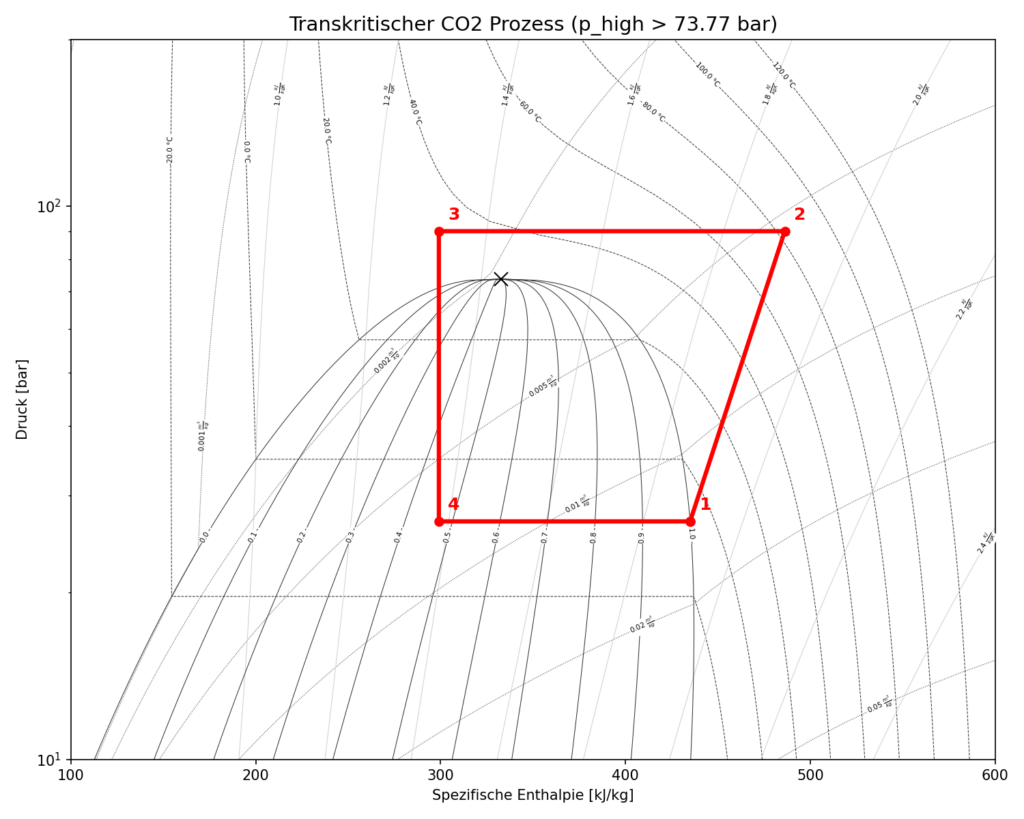
The F-Gas Regulation is increasingly restricting or banning refrigerants with a high GWP. Therefore, natural refrigerants such as CO₂ (R744), propane (R290) or ammonia (R717) , as well as modern HFO refrigerants, are becoming increasingly important.
2. Safety: Flammability and toxicity
Refrigerants are classified into safety classes (e.g., A1, A2L, A3, B2). These provide information about:
Flammability
toxicity
Handling requirements
While conventional HFC refrigerants were mostly non-flammable (A1), many more environmentally friendly alternatives are slightly or highly flammable (A2L or A3). This means that
the system technology, installation conditions, and safety measures must be adapted accordingly.
Professional planning is essential here.
3. Energy efficiency and performance
A good refrigerant is characterized by:
High volumetric cooling capacity
Good thermodynamic properties
Low compression end temperatures
Good efficiency in partial load operation
Efficiency directly impacts operating costs. A slightly higher purchase price can quickly pay for itself through lower energy consumption.
4. Future-proofing and availability
A crucial point is the long-term perspective:
Will this refrigerant be affected by future bans?
How stable is the price trend?
Are there sufficient spare parts and service expertise available?
Many operators are now consciously opting for future-proof solutions with a low GWP in order to avoid later retrofitting.
5. Typical areas of application
Depending on the application, different refrigerants are suitable:
Commercial refrigeration:
CO₂ (R744), R290
Industrial refrigeration:
Ammonia (R717), CO₂ cascade systems
Air conditioning systems:
R32, R290, HFO mixtures
Heat pumps:
R290, R32, R744
The optimal choice always depends on the specific application, performance level and structural conditions.
Conclusion: There is no perfect refrigerant
Choosing the right refrigerant always involves a combination of factors:
Environmental requirements
Security
Efficiency
economy
Legal requirements
There is no one-size-fits-all recommendation – each system must be considered individually. Those who opt for future-proof, energy-efficient, and environmentally friendly solutions today are investing not only in technology, but also in sustainability and long-term planning security.